You might hit a brick wall when you try to clear a service light on a 2026 Volkswagen Golf. Similarly, coding a new headlight on a modern Audi A3 is no longer a simple task. Consequently, the days of “plug and play” coding are fading fast. SFD 2 (Schutz Fahrzeug Diagnose) has now replaced them.
At DiagSoftShop, we hear from frustrated professionals every single day. These experts struggle with new digital locks. However, these barriers are not impassable if you have the right knowledge. You also need the correct hardware. To find the latest VAG-compatible interfaces, visit diagsoftshop.com.
The New Reality: SFD 2 and Cloud-Based Coding
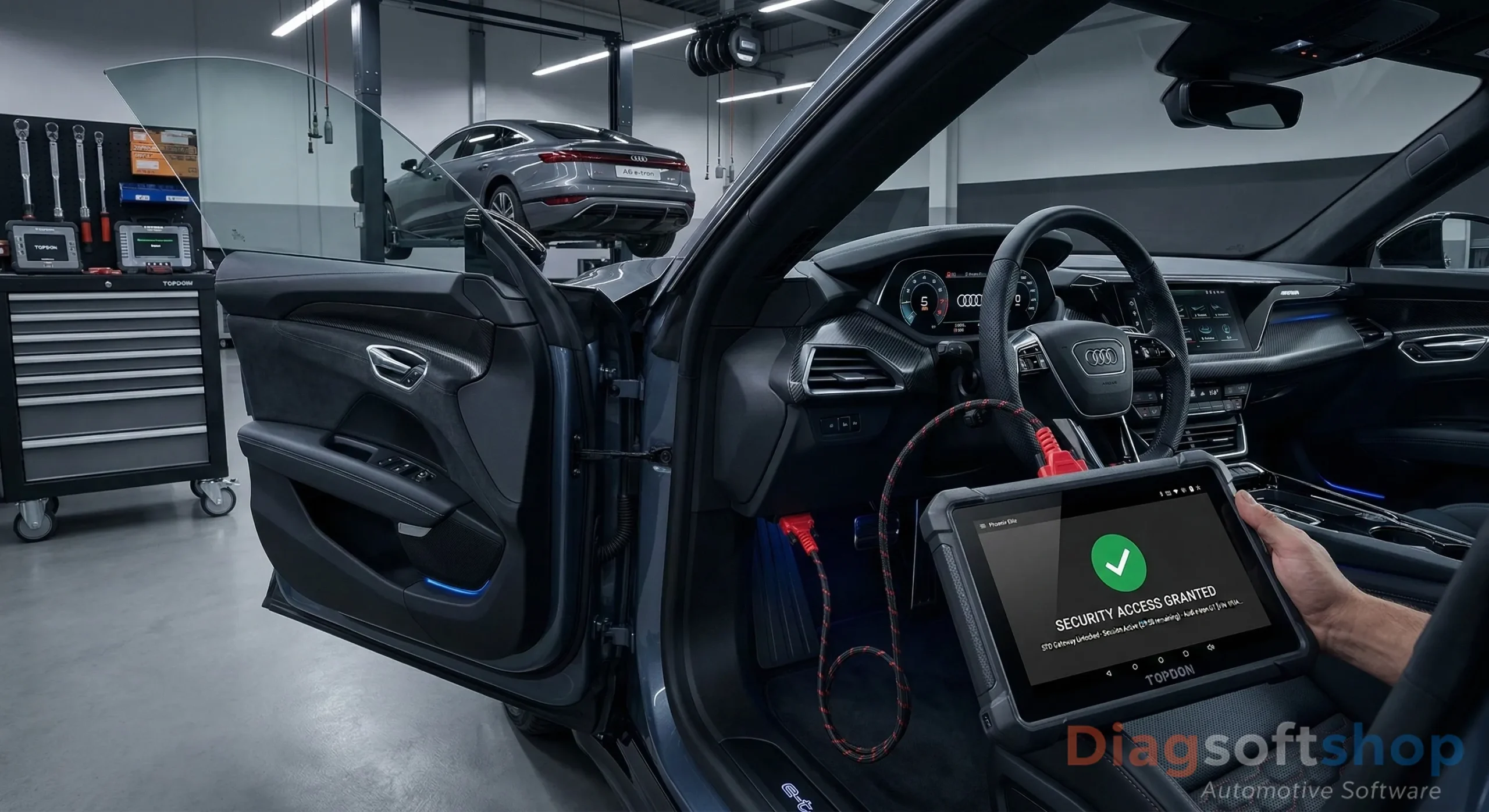
By 2026, the VAG Group has fully deployed SFD 2. This version is much stricter than the first one. Indeed, SFD 2 requires a real-time token for almost every modification on the vehicle’s CAN bus.
- Real-Time Authentication: You must now use an official Geko account. Alternatively, choose a tool that generates SFD 2 tokens automatically.
- Component Protection (CP) 2.0: Swapping a used radar sensor triggers a lock immediately. Therefore, you must connect to VAG servers to release it.
- Cyber Security Standards: New regulations require a secure handshake. As a result, your VCI must verify its identity before reading live data.
Choosing the Right Tools for VAG in 2026
Your toolbox must evolve to stay competitive. Specifically, you need tools that handle high-speed data. Here is what we recommend at diagsoftshop.com:
- The OEM Choice (VAS 6154A / ODIS): This remains the best option for deep programming. Furthermore, ensure your interface supports DoIP for electric vehicles.
- The Fast Alternative (VCDS / VCP): These work perfectly for basic diagnostics on older models. However, always use the latest HEX-V2 hardware for newer protocols.
- The Multi-Brand Powerhouse: Tools like Autel MaxiSys now offer integrated SFD unlocking. Thus, they save you the headache of managing tokens manually.
💡 Le Conseil de l’Expert DiagSoftShop
“Always perform a ‘Network Sleep’ cycle after you finish coding an ID.7 or Q4 e-tron. Usually, these modules only accept new parameters after the high-voltage system powers down completely. This process often takes up to 10 minutes.”